
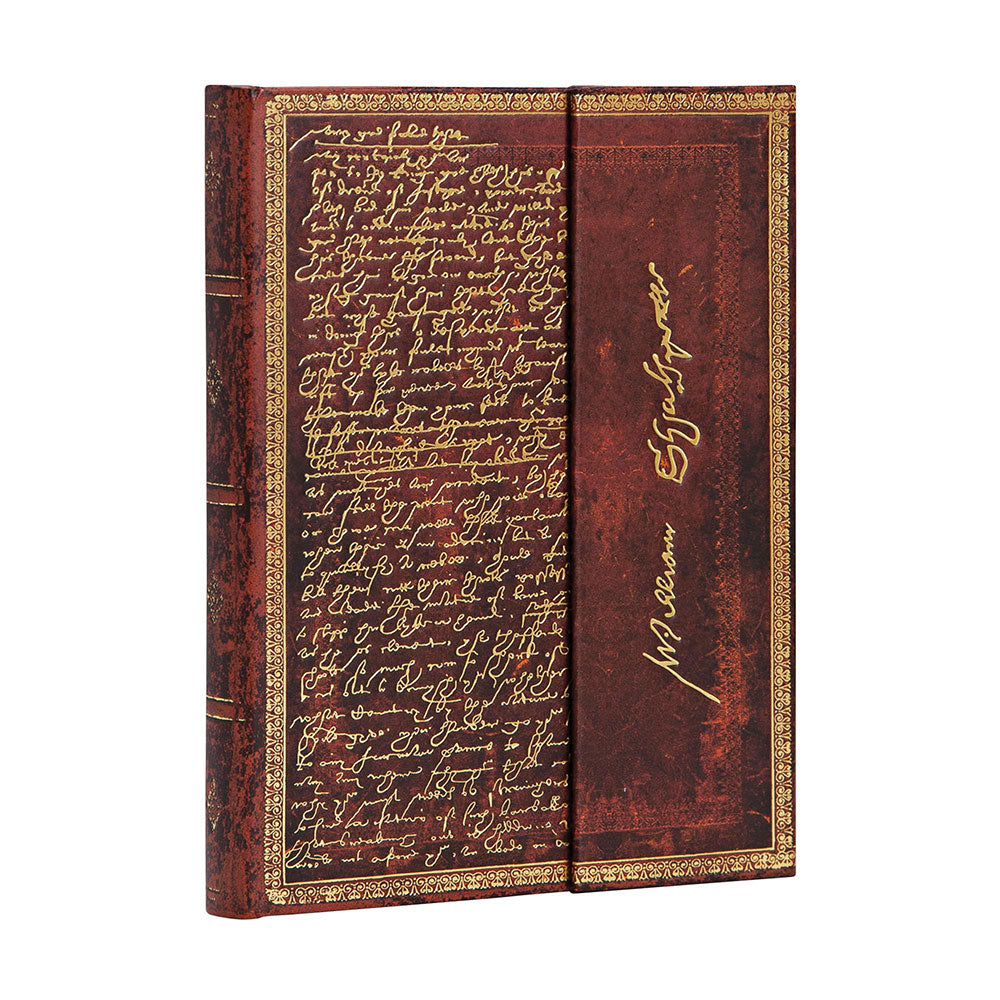
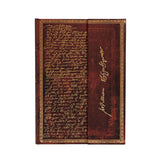

Shakespeare Magnetic Cover Notebook
- Sold By: Paperblanks
- Categories All Products, Notebook, Paperblanks Hardcover Notebooks, Paperblanks Literary Collection Notebooks, Paperblanks Notebook
- Type: Notebook
-
Long considered the greatest of English writers, William Shakespeare (1564–1616) left very few traces of his handwriting. For this reason, Shakespeare’s possible contribution to the handwritten manuscript of the play Sir Thomas More has been hotly debated for centuries since it was written in 1595. Thought to have been written and revised by five different playwrights, the play was heavily censored and even banned when it was published, and it is believed that it was never performed during the period it was published. However, in later years, the scene depicting More quelling a riot became quite remarkable due to its possible connection to Shakespeare, which led to a resurgence of interest in the collaborative Elizabethan play.
Sir Thomas More tells the story of the life and death of More, a Catholic martyr. The discovery of the original manuscript in the 1700s, initially attributed only to Anthony Munday, led handwriting experts to note the contributions of at least five different authors. Because no other significant piece of writing remains in Shakespeare’s own hand, the process of linking the great playwright to the work has been, at best, difficult and controversial. Evidence such as Shakespeare’s characteristic spelling preferences, modes of expression, and other stylistic elements has been examined, and today it is generally accepted that the three pages written by "Hand D" came from Shakespeare himself.
In today's geopolitical landscape, it is particularly interesting to note the content of Shakespeare's contribution, where he passionately advocates for refugees and displaced people. The first known performance of the play was initiated in 1964 at the Nottingham Playhouse, with none other than Sir Ian McKellen in the role of Thomas More.
Despite some dissenters' insistence, the play has been accepted as part of the Shakespeare canon since the mid-twentieth century and was first performed by the Royal Shakespeare Company in 2005 with actor Nigel Cooke playing the role of More. We are thrilled to be able to present this legendary dramatic work from the hand of one of the greatest writers of all time as part of our Embellished Manuscripts Collection.
-
Page type Acid-free paper (fountain pen friendly) Back Cover Accordion inner pocket for storing notes Notebook Sizes/Page Count/
Paper Weight
Mini: 10x14cm / 176 pages / 85gsm
Midi: 13x18cm / 144 pages / 120gsm
Ultra: 18x23cm / 144 pages / 120gsm
Grande: 21x30cm / 128 pages / 120 gsm
Cover type Hardcover Embossed Notebook / Magnetic Closure Origin Canada -

Paperblanks is a Canadian manufacturer that produces quality notebooks that are not only attractive but also extremely well-structured and bound using traditional techniques; the bindings are not glued (a binding technique that, while economical for the manufacturer, eventually leads to page loss) but are instead all sewn.
All Paperblanks notebooks are bound using two methods. They are either hand-sewn using 'Coptic' binding, which dates back to 4th-century Egypt, or Smythe sewn, the most durable binding technique, which allows the notebook to lie flat without page loss.
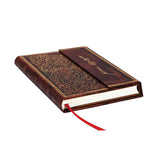
All Paperblanks notebooks use acid-free, archival-quality, and high-opacity fine laid writing paper. Their notebooks also feature a ribbon placeholder and an inner pocket inside the back cover to store your notes.
Â
Similar Products
You might also like these products:
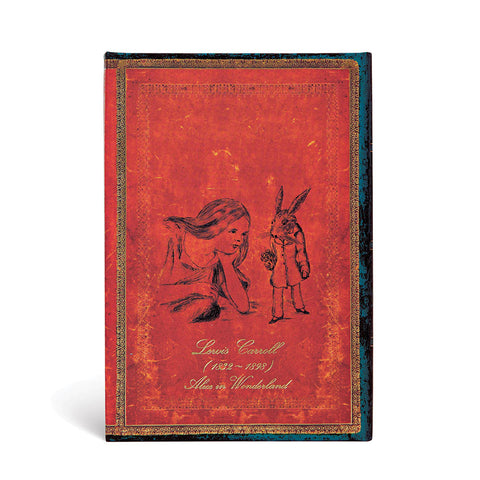
Alexandre Dumas 150th Anniversary Notebook
You might also like these products:
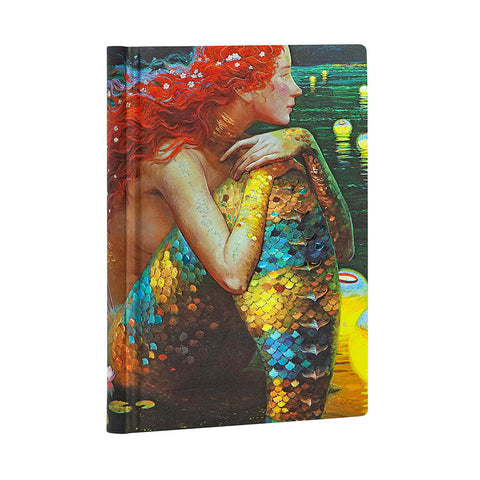
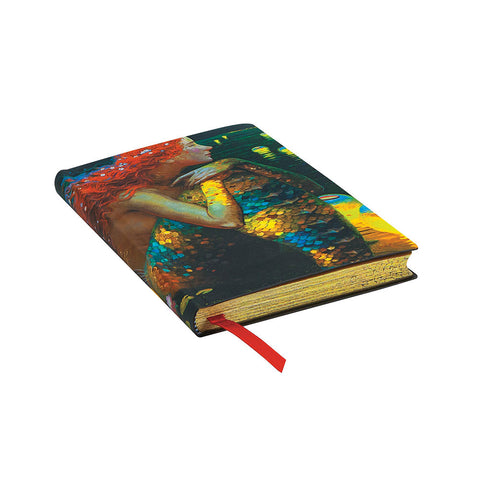
Alice in Wonderland Magnetic Cover Notebook
You might also like these products:
Anticipation Softcover Notebook
You might also like these products:
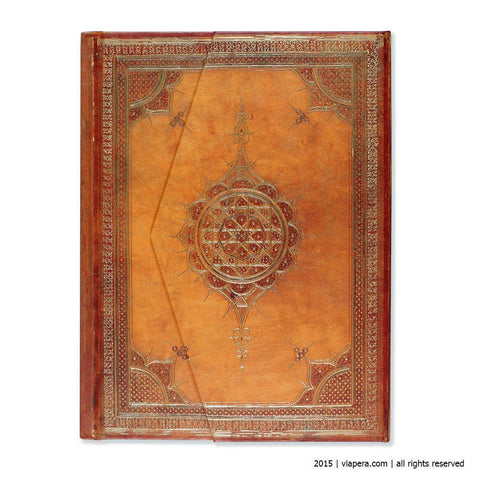
Arabesque Notebook


You might also like these products:
Asterix A New Journey A5 Exercise Notebook

You might also like these products:
Asterix A New Journey A6 Notebook


You might also like these products:
Asterix the Gaul Midi Notebook


You might also like these products:
Asterix The Gaul Mini Notebook


You might also like these products:
Asterix the Gaul Ultra Notebook


You might also like these products:
Asterix & Obelix Medium Notebook


You might also like these products:
Asterix & Obelix Mini Notebook


You might also like these products:
Asterix & Obelix Ultra Notebook


You might also like these products:
Astrid, Pippi Longstocking Midi Magnetic Closure Notebook


You might also like these products:
Astrid, Pippi Longstocking Ultra Magnetic Notebook
You might also like these products:
Azure Equinoxe Notebook


You might also like these products:
Balloon Festival Softcover Midi Unlined Notebook


You might also like these products:
Balloon Festival Softcover Mini Notebook


You might also like these products:
Balloon Festival Softcover Ultra Unlined Notebook
You might also like these products:
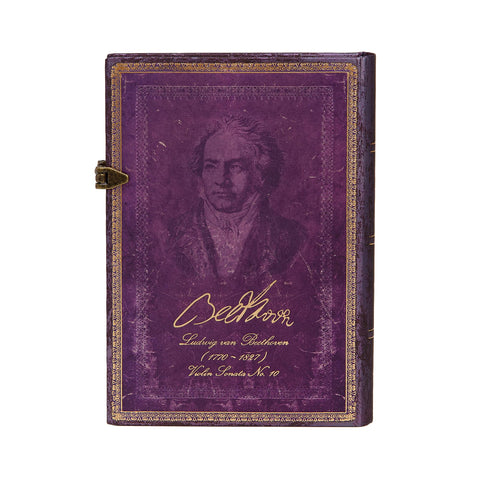
Beethoven's 250th Birthday Notebook
You might also like these products:
Beethoven's 250th Birthday Music Notebook
You might also like these products:
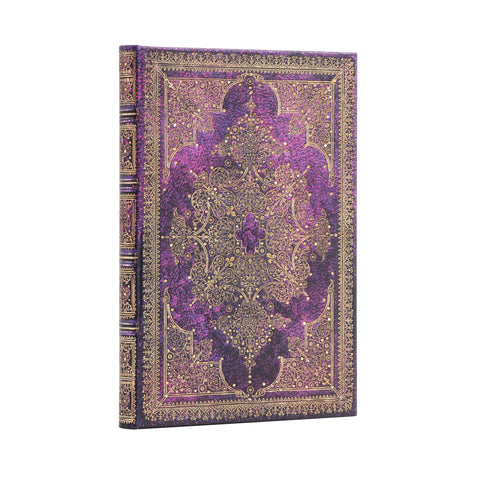
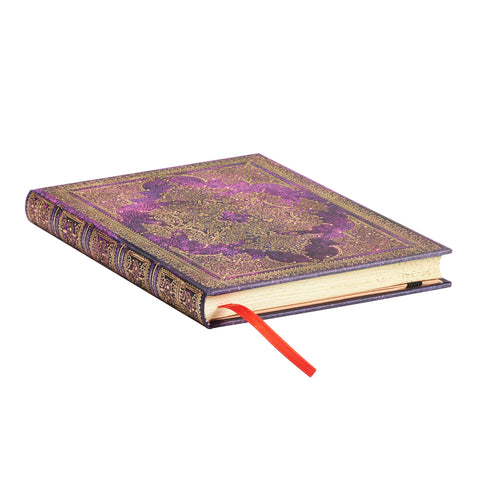
Bijou Notebook


You might also like these products:
Bindweed Fairy Softcover Midi Notebook


You might also like these products:
Bindweed Fairy Softcover Ultra Notebook
-
Long considered the greatest of English writers, William Shakespeare (1564–1616) left very few traces of his handwriting. For this reason, Shakespeare’s possible contribution to the handwritten manuscript of the play Sir Thomas More has been hotly debated for centuries since it was written in 1595. Thought to have been written and revised by five different playwrights, the play was heavily censored and even banned when it was published, and it is believed that it was never performed during the period it was published. However, in later years, the scene depicting More quelling a riot became quite remarkable due to its possible connection to Shakespeare, which led to a resurgence of interest in the collaborative Elizabethan play.
Sir Thomas More tells the story of the life and death of More, a Catholic martyr. The discovery of the original manuscript in the 1700s, initially attributed only to Anthony Munday, led handwriting experts to note the contributions of at least five different authors. Because no other significant piece of writing remains in Shakespeare’s own hand, the process of linking the great playwright to the work has been, at best, difficult and controversial. Evidence such as Shakespeare’s characteristic spelling preferences, modes of expression, and other stylistic elements has been examined, and today it is generally accepted that the three pages written by "Hand D" came from Shakespeare himself.
In today's geopolitical landscape, it is particularly interesting to note the content of Shakespeare's contribution, where he passionately advocates for refugees and displaced people. The first known performance of the play was initiated in 1964 at the Nottingham Playhouse, with none other than Sir Ian McKellen in the role of Thomas More.
Despite some dissenters' insistence, the play has been accepted as part of the Shakespeare canon since the mid-twentieth century and was first performed by the Royal Shakespeare Company in 2005 with actor Nigel Cooke playing the role of More. We are thrilled to be able to present this legendary dramatic work from the hand of one of the greatest writers of all time as part of our Embellished Manuscripts Collection.
-
Page type Acid-free paper (fountain pen friendly) Back Cover Accordion inner pocket for storing notes Notebook Sizes/Page Count/
Paper Weight
Mini: 10x14cm / 176 pages / 85gsm
Midi: 13x18cm / 144 pages / 120gsm
Ultra: 18x23cm / 144 pages / 120gsm
Grande: 21x30cm / 128 pages / 120 gsm
Cover type Hardcover Embossed Notebook / Magnetic Closure Origin Canada -
Paperblanks is a Canadian manufacturer that produces quality notebooks that are not only attractive but also extremely well-structured and bound using traditional techniques; the bindings are not glued (a binding technique that, while economical for the manufacturer, eventually leads to page loss) but are instead all sewn.
All Paperblanks notebooks are bound using two methods. They are either hand-sewn using 'Coptic' binding, which dates back to 4th-century Egypt, or Smythe sewn, the most durable binding technique, which allows the notebook to lie flat without page loss.
All Paperblanks notebooks use acid-free, archival-quality, and high-opacity fine laid writing paper. Their notebooks also feature a ribbon placeholder and an inner pocket inside the back cover to store your notes.
Â


