
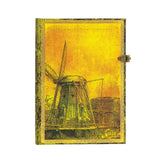
Rembrandt 350th Anniversary Notebook
- Sold By: Paperblanks
- Categories All Products, Notebook, Paperblanks Artists Series, Paperblanks Hardcover Notebooks, Paperblanks Notebook
- Type: Notebook
-
Undoubtedly one of the world's greatest painters, the Dutch artist Rembrandt van Rijn (1606–1669) was an equally talented printmaker. In fact, he was a pioneer who mastered the field.
Rembrandt transformed printmaking into an art form through technical innovations and the refinement of his artistic skills. His extraordinary nuance of shadow and detail, as well as human emotion, stemmed from his unique lightness of touch. He would carve or draw onto a resin layer on copper plates, which were then immersed in an acid bath. The engraved lines became grooves that allowed ink to be printed onto paper as a mirror image.
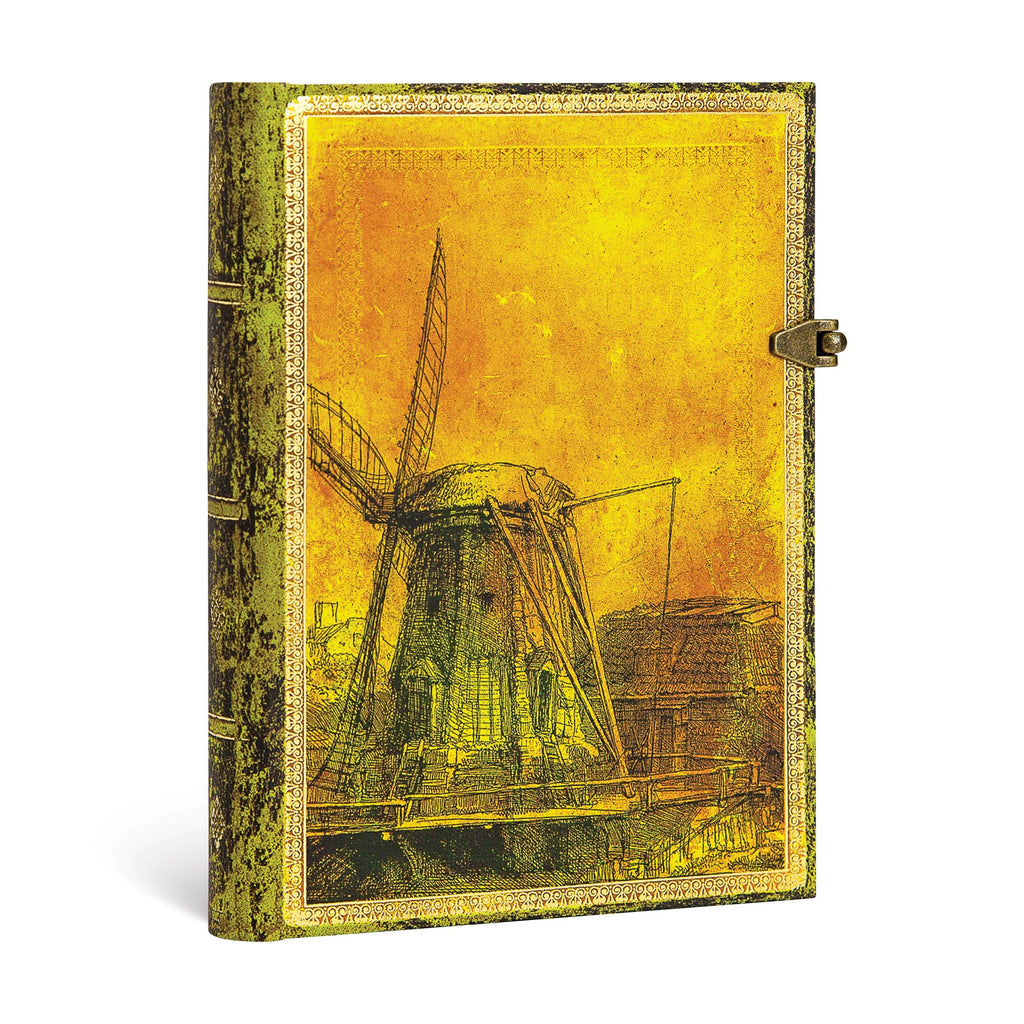
The landscape of the Netherlands, Rembrandt's homeland, was often a source of inspiration for his prints, and The Windmill, completed in 1641 and reproduced here, is no exception. A drypoint etching, this work showcases how he used brushed acid to create specific lines—in this case, implying wisps of clouds in the sky.
In The Windmill, Rembrandt depicts the "Little Stink Mill," which stood on the De Passeerde rampart along the western side of Amsterdam. This name was given due to the rather unpleasant odors resulting from the processing of tanned leather with cod liver oil by the Tanners' Guild, which operated the mill. Despite its unique name and scent, Rembrandt embraced the mill as a representation of the bridge between the city and the countryside. The remarkable level of detail, varying textures, and depth of tone in the work reveal the artist's unique drawing skills. In fact, it is so realistic that we can assume Rembrandt began the work on-site before finishing it in his studio.
Rembrandt's The Windmill is part of the collection at the Museum Het Rembrandthuis (Rembrandt House Museum) in Amsterdam today. Gifted by Felix M. Warburg and his family in 1941, the painting is not permanently on display, making this Special Edition even more unique. We first published the design as an Embellished Manuscript in the Autumn of 2006, and we are delighted to bring it back as one of our 2019 Special Editions, honoring Rembrandt on the 350th anniversary of his death.
-
Page Type Acid-free paper (fountain pen friendly) Back Cover Accordion interior pocket for storing notes Notebook Sizes/Page Count/
Paper Weight
Mini: 10x14cm / 240 pages / 120gsm
Midi: 13x18cm / 240 pages / 120gsm
Ultra: 18x23cm / 144 pages / 120gsm
Grande: 21x30cm / 128 pages / 120 gsm
Cover type Hardcover Embossed Notebook Origin Canada -

Paperblanks is a Canadian manufacturer that produces quality notebooks that are not only attractive but also extremely well-structured and bound using traditional techniques; the bindings are not glued (a binding technique that is economical for the manufacturer but eventually leads to page loss) but are instead all sewn.
All Paperblanks notebooks are bound using two methods. They are either hand-sewn using 'Coptic' binding, which dates back to 4th-century Egypt, or Smythe sewn, which is the most durable binding technique and allows the notebook to open flat without page loss.
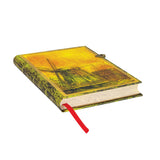
All Paperblanks notebooks use acid-free, archival-quality, and high-opacity fine laid writing paper. Their notebooks also feature a ribbon page marker and an interior pocket inside the back cover to store your notes.
Â
Similar Products
You might also like these products:
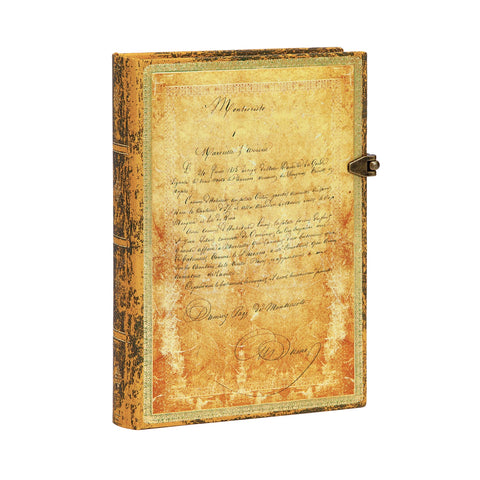
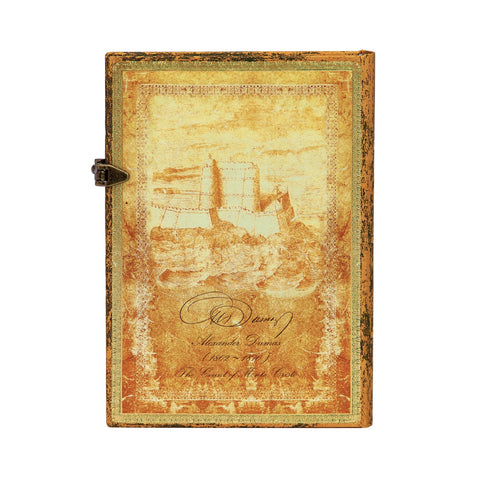
Alexandre Dumas 150th Anniversary Notebook
You might also like these products:
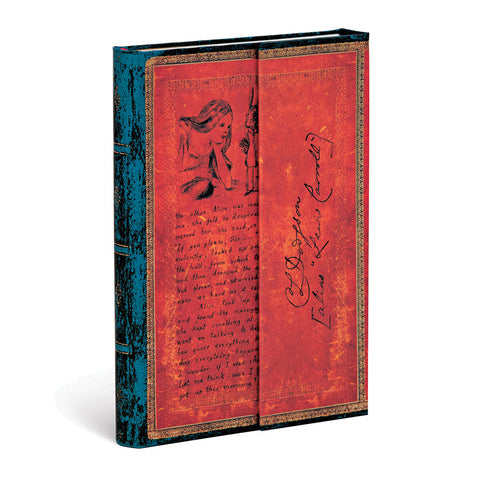
Alice in Wonderland Magnetic Cover Notebook
You might also like these products:
Anticipation Softcover Notebook
You might also like these products:
Arabesque Notebook


You might also like these products:
Asterix A New Journey A5 Exercise Notebook

You might also like these products:
Asterix A New Journey A6 Notebook


You might also like these products:
Asterix the Gaul Midi Notebook


You might also like these products:
Asterix The Gaul Mini Notebook


You might also like these products:
Asterix the Gaul Ultra Notebook


You might also like these products:
Asterix & Obelix Medium Notebook


You might also like these products:
Asterix & Obelix Mini Notebook


You might also like these products:
Asterix & Obelix Ultra Notebook


You might also like these products:
Astrid, Pippi Longstocking Midi Magnetic Closure Notebook


You might also like these products:
Astrid, Pippi Longstocking Ultra Magnetic Notebook
You might also like these products:
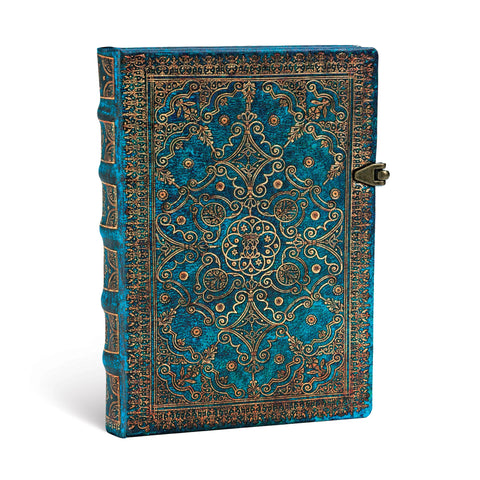
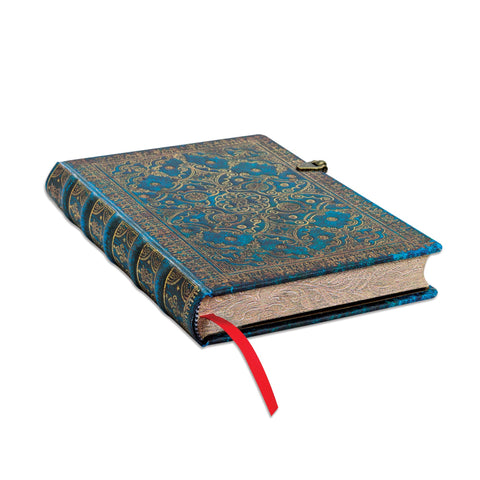
Azure Equinoxe Notebook


You might also like these products:
Balloon Festival Softcover Midi Unlined Notebook


You might also like these products:
Balloon Festival Softcover Mini Notebook


You might also like these products:
Balloon Festival Softcover Ultra Unlined Notebook
You might also like these products:
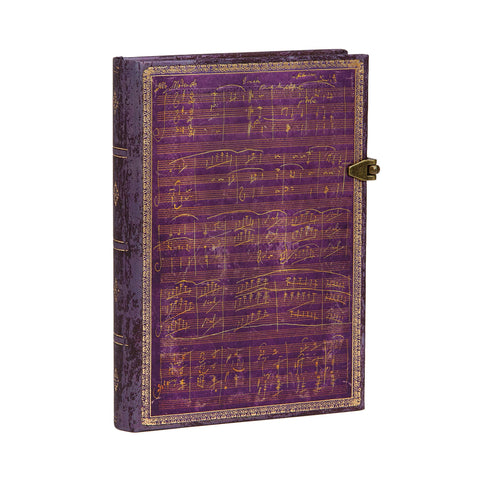
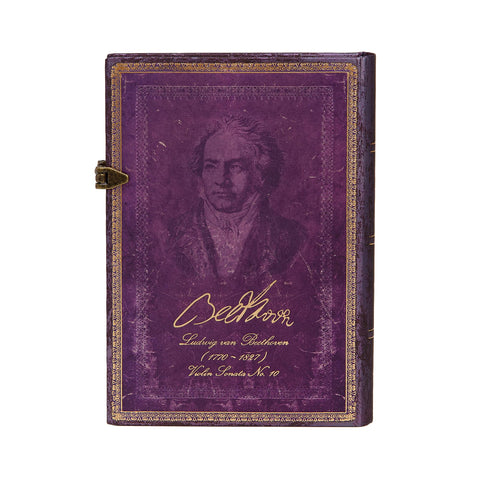
Beethoven's 250th Birthday Notebook
You might also like these products:
Beethoven's 250th Birthday Music Notebook
You might also like these products:
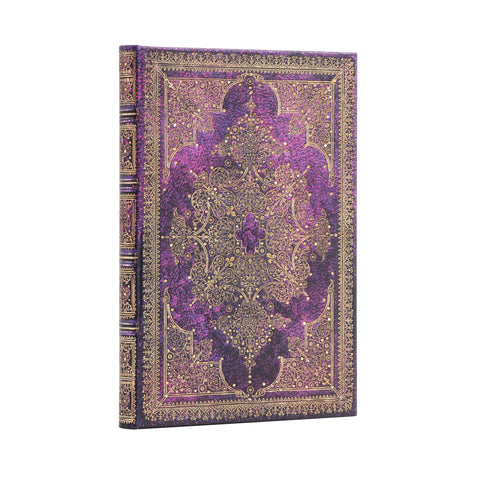
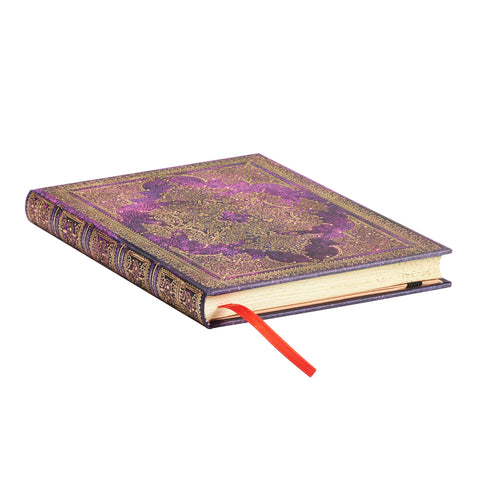
Bijou Notebook


You might also like these products:
Bindweed Fairy Softcover Midi Notebook


You might also like these products:
Bindweed Fairy Softcover Ultra Notebook
-
Undoubtedly one of the world's greatest painters, the Dutch artist Rembrandt van Rijn (1606–1669) was an equally talented printmaker. In fact, he was a pioneer who mastered the field.
Rembrandt transformed printmaking into an art form through technical innovations and the refinement of his artistic skills. His extraordinary nuance of shadow and detail, as well as human emotion, stemmed from his unique lightness of touch. He would carve or draw onto a resin layer on copper plates, which were then immersed in an acid bath. The engraved lines became grooves that allowed ink to be printed onto paper as a mirror image.
The landscape of the Netherlands, Rembrandt's homeland, was often a source of inspiration for his prints, and The Windmill, completed in 1641 and reproduced here, is no exception. A drypoint etching, this work showcases how he used brushed acid to create specific lines—in this case, implying wisps of clouds in the sky.
In The Windmill, Rembrandt depicts the "Little Stink Mill," which stood on the De Passeerde rampart along the western side of Amsterdam. This name was given due to the rather unpleasant odors resulting from the processing of tanned leather with cod liver oil by the Tanners' Guild, which operated the mill. Despite its unique name and scent, Rembrandt embraced the mill as a representation of the bridge between the city and the countryside. The remarkable level of detail, varying textures, and depth of tone in the work reveal the artist's unique drawing skills. In fact, it is so realistic that we can assume Rembrandt began the work on-site before finishing it in his studio.
Rembrandt's The Windmill is part of the collection at the Museum Het Rembrandthuis (Rembrandt House Museum) in Amsterdam today. Gifted by Felix M. Warburg and his family in 1941, the painting is not permanently on display, making this Special Edition even more unique. We first published the design as an Embellished Manuscript in the Autumn of 2006, and we are delighted to bring it back as one of our 2019 Special Editions, honoring Rembrandt on the 350th anniversary of his death.
-
Page Type Acid-free paper (fountain pen friendly) Back Cover Accordion interior pocket for storing notes Notebook Sizes/Page Count/
Paper Weight
Mini: 10x14cm / 240 pages / 120gsm
Midi: 13x18cm / 240 pages / 120gsm
Ultra: 18x23cm / 144 pages / 120gsm
Grande: 21x30cm / 128 pages / 120 gsm
Cover type Hardcover Embossed Notebook Origin Canada -
Paperblanks is a Canadian manufacturer that produces quality notebooks that are not only attractive but also extremely well-structured and bound using traditional techniques; the bindings are not glued (a binding technique that is economical for the manufacturer but eventually leads to page loss) but are instead all sewn.
All Paperblanks notebooks are bound using two methods. They are either hand-sewn using 'Coptic' binding, which dates back to 4th-century Egypt, or Smythe sewn, which is the most durable binding technique and allows the notebook to open flat without page loss.
All Paperblanks notebooks use acid-free, archival-quality, and high-opacity fine laid writing paper. Their notebooks also feature a ribbon page marker and an interior pocket inside the back cover to store your notes.
Â


